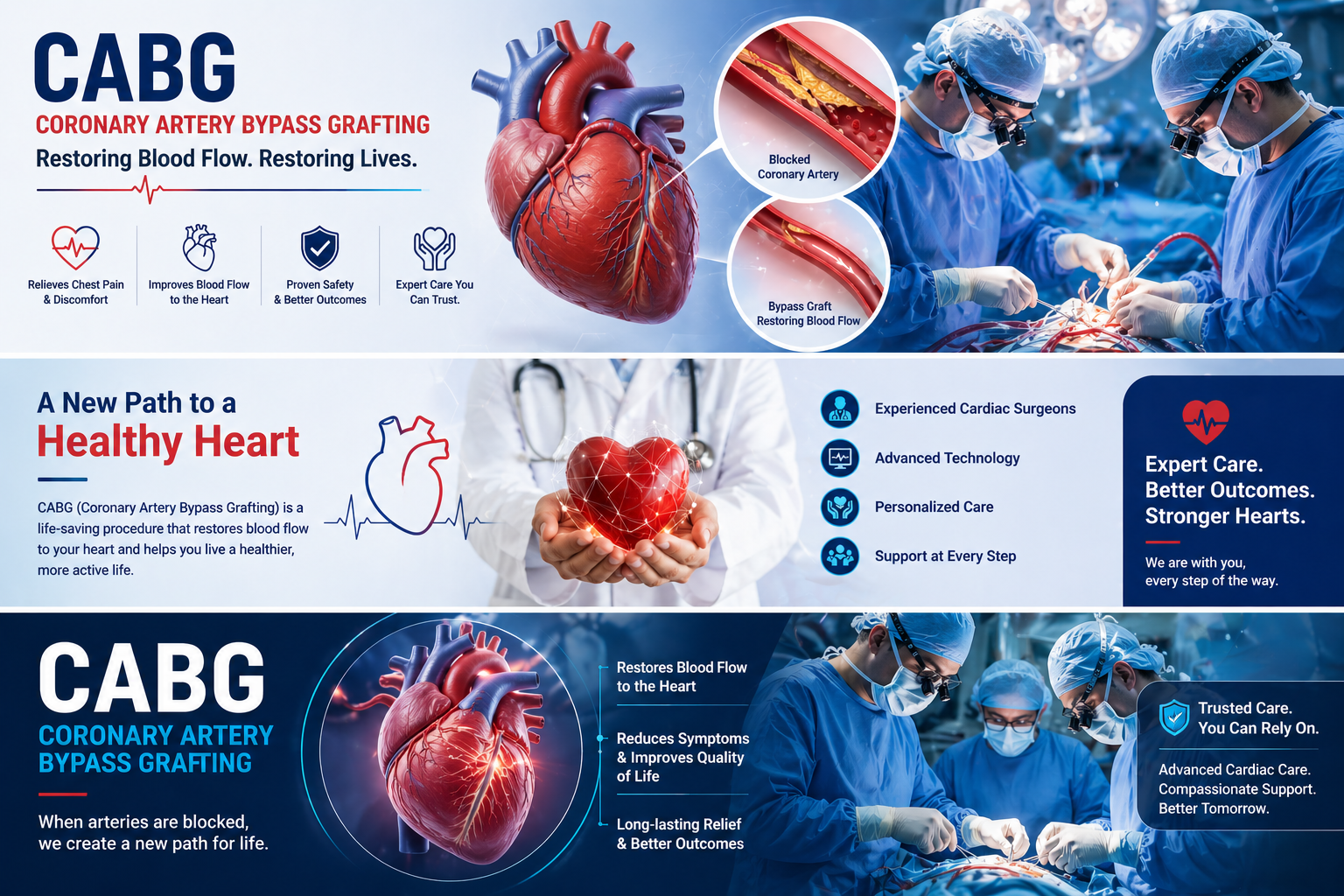
CABG is a well-established heart surgery used to treat coronary artery disease, where arteries become narrowed or blocked. The procedure uses a healthy blood vessel from the chest, arm, or leg to create a bypass around the blockage, allowing blood to reach the heart muscle more effectively.
Coronary Artery Bypass Grafting (CABG)
It is a gold-standard surgical procedure for restoring blood flow to the heart in patients with coronary artery disease. This condition occurs when the coronary arteries become narrowed or blocked due to plaque buildup, limiting oxygen supply to the heart muscle.
CABG involves using a healthy blood vessel—typically from the chest, arm, or leg—to create a new pathway around the blocked artery. This allows blood to flow freely to the heart, improving its function and reducing symptoms.
Coronary Artery Bypass Grafting (CABG) is recommended for patients with:
Reduced heart function due to poor circulation
Angioplasty (Stenting): A minimally invasive procedure used to open blocked arteries.
CABG: A surgical procedure that creates a new pathway for blood flow around blocked arteries.